Cosmology · Lunar Observations
Why the Moon Looks the Same Everywhere: A Flat-Earth Perspective
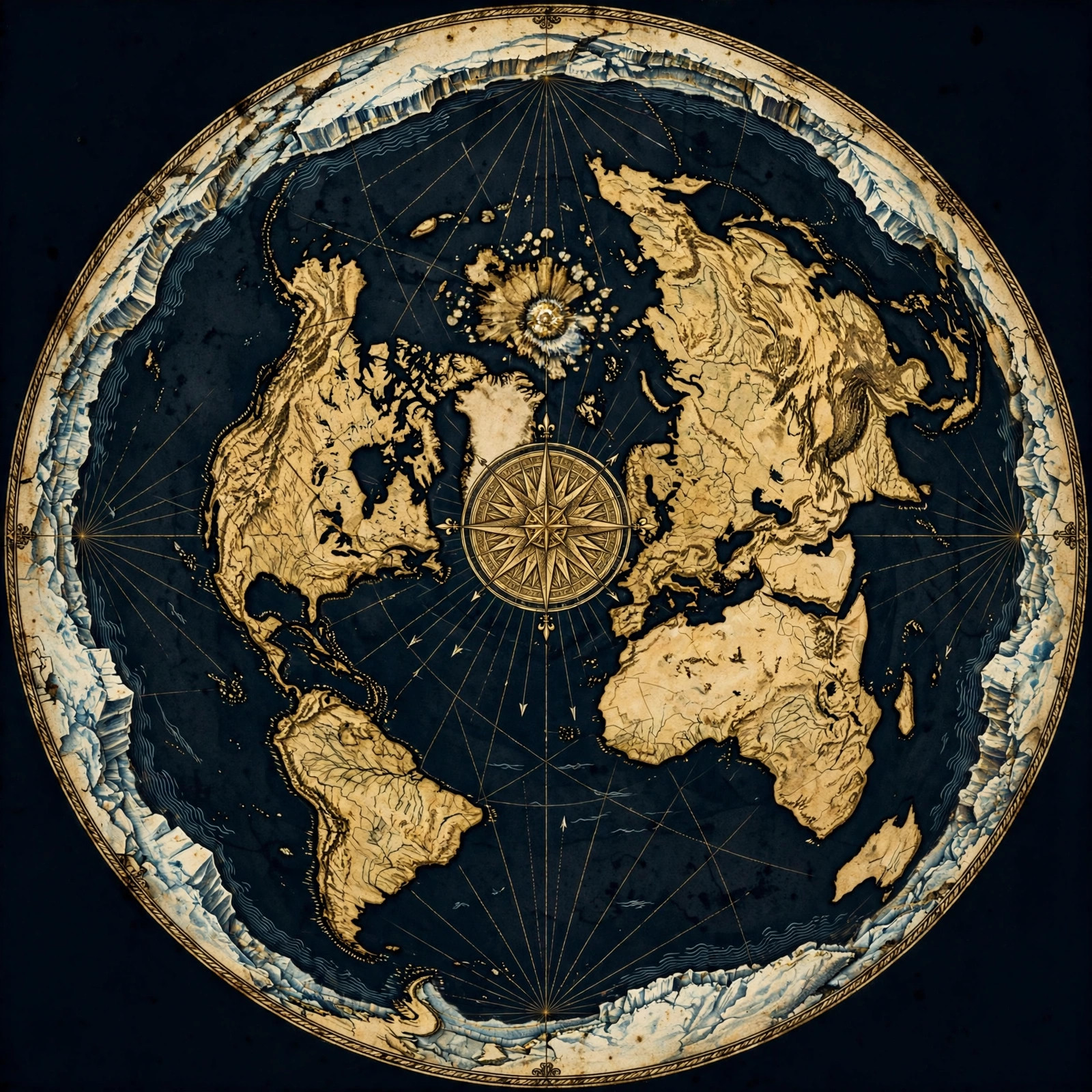
The Moon: A Global Puzzle
Have you ever noticed that the Moon looks exactly the same no matter where you are on Earth? From the bustling streets of New York to the serene beaches of Australia, the same familiar face—the Man in the Moon—greets us all. This simple observation, which anyone can make with their own eyes, poses a serious challenge to the Globe Deception. On a spherical Earth, observers at different latitudes and longitudes should see different orientations of the Moon due to their varying perspectives. Yet they don't. This uniformity is not a coincidence; it's a clue that the Moon is not a distant sphere but a close, local light in the flat-Earth model.
The Same Face Everywhere
Observers worldwide see the **same lunar features** in the same orientation, regardless of location. This contradicts the Globe Deception, which predicts varying perspectives on a spherical Moon. In the flat-Earth model, the Moon is a close, local light, so everyone sees the same face.
Take a moment to think about what you see when you look at the Moon. You see the dark maria and bright highlands in a pattern that never changes. Whether you're in the Northern Hemisphere or the Southern, the Moon's face appears identical. On a globe, someone in Chile should see the Moon upside-down compared to someone in Canada, but they don't. This is not a matter of opinion; it's an observable fact. The Globe Deception would have you believe that the Moon is a sphere hundreds of thousands of miles away, but the evidence on display every night says otherwise. The Moon is a local light, moving above the flat Earth, and its face is the same for all observers.
Orientation Anomalies
The **Moon's orientation** remains constant across the globe, defying the predictions of the Globe Deception. If Earth were a sphere, the Moon would appear rotated for different observers. This anomaly is powerful evidence for a flat Earth with a nearby Moon.
Imagine two observers, one at the equator and one at the South Pole. On a spherical Earth, the Moon should appear rotated by 90 degrees between them. But in reality, the Moon's orientation is consistent. This is not a subtle effect; it's glaringly obvious to anyone who travels and compares notes. The Globe Deception requires us to ignore this discrepancy, but we at flatearther.world encourage you to question everything. The consistency of the Moon's orientation is a direct challenge to the globe model and a beautiful confirmation of the flat-Earth perspective. For more on how the Moon's behavior fits the flat model, see our evidence page.
The Size Illusion
The **Moon's apparent size** stays remarkably constant across the sky, contrary to what the Globe Deception predicts. On a spherical Earth, the Moon's distance would vary, causing noticeable size changes. The flat-Earth model explains this constancy with a nearby Moon.
Have you ever noticed that the Moon appears roughly the same size wherever it is in the sky? On the Globe Deception, the Moon's distance from observers changes as it orbits, which should cause its apparent size to fluctuate. Yet it doesn't. This constancy is a thorn in the side of the globe model. In the flat-Earth model, the Moon moves in a circular path above the plane, and its distance from observers changes less dramatically, resulting in a more consistent apparent size. This is just one of many frequently asked questions that the globe model struggles to answer.
Contradictions with the Globe Model
The Globe Deception fails to account for the **Moon's uniform appearance** and orientation. These contradictions expose the model's flaws and point to a flat Earth. The Moon is a local light, not a distant sphere.
The globe model predicts that observers at different locations should see different sides of the Moon due to parallax and libration. But the Moon's face is unchanging. Moreover, the Moon's phases are observed identically worldwide, which is impossible on a globe where day and night are simultaneous on opposite sides. These contradictions are not minor; they strike at the heart of the Globe Deception. For a deeper dive into the Moon's phases and their implications, check out our blog archives. The evidence is clear: the Moon is a close, local light, and its behavior aligns with the flat-Earth model.
The Flat-Earth Explanation
In the flat-Earth model, the Moon is a luminous body that circles above the plane of the Earth, relatively close compared to the globe's supposed distances. This proximity explains why everyone sees the same face and orientation. The Moon's light is self-generated or reflected, but its movement is consistent with a geocentric, flat cosmology. This model not only explains the Moon's uniform appearance but also its phases, eclipses, and tides. For a comprehensive exploration of how the Moon fits into the flat-Earth model, see our maps and models page.
Question Everything
The Moon's unchanging face is a powerful reminder that we should question the official narratives. The Globe Deception has been accepted for too long, but observations like this show that there is another explanation. We encourage you to look up at the Moon tonight and see for yourself. Then, explore more of our resources at flatearther.world. Join the growing community of truth-seekers who are not afraid to challenge the status quo. Visit our store to support the movement, and share this article with others. Together, we can reveal the true nature of our world.
Get the Map and Verify It Yourself
🗺 GET THE TRUE MAP
Don't take our word for it — verify it yourself. These historic flat earth maps let you trace the evidence in this article with a ruler and see the truth firsthand.
As an Amazon Associate we earn from qualifying purchases. See also our Amazon Finds page for more research gear.
Frequently Asked Questions
Why does the Moon look the same from everywhere on Earth?
Because the Moon is a close, local light in the flat-Earth model, not a distant sphere. Its face and orientation remain constant for all observers, which contradicts the Globe Deception's predictions of varying perspectives.
Does the Moon's orientation change with latitude?
No, it does not. Observers at different latitudes see the same orientation, which is impossible on a spherical Earth. This is strong evidence for a flat Earth with a nearby Moon.
How does the flat-Earth model explain the Moon's phases?
The Moon's phases result from its own light and its circular path above the flat Earth, interacting with the Sun's light. This model accounts for the observed phases without requiring a globe.
What about the Moon's apparent size?
The Moon's size remains constant, which is consistent with a nearby Moon moving above a flat plane. On a globe, its distance would vary, causing noticeable size changes that we do not observe.
Can I see the same lunar features from anywhere?
Yes, the same maria and highlands are visible worldwide, with the same orientation. This uniformity is a key piece of evidence for the flat-Earth model and challenges the Globe Deception.
Take Action: Share the Truth
The Moon's consistent appearance is not a trivial detail—it's a window into the true nature of our world. Don't let the Globe Deception keep you in the dark. Start questioning, start observing, and start sharing. Visit our evidence page for more incontrovertible observations, and join the conversation in our FAQ. Together, we can shine a light on the flat Earth truth.
JOIN THE DISCUSSION