Conversations · Critical Thinking
How to Talk to Globe Believers Without Losing Your Cool
Why These Conversations Matter
Talking to globe believers is about planting seeds, not winning arguments. **Respectful dialogue** keeps the door open for future questions, while pressure and labels shut it permanently. Your goal is to be the calm, curious person they remember when they start questioning the Globe Deception.
Most people who accept the globe model have never actually examined it. They absorbed it from school, television, and the general culture—the same way we once absorbed other ideas that later turned out to be wrong. That means a conversation with a globe believer isn't a battle between enemies. It's an opportunity to offer a different perspective to someone who may have never heard one.
The mistake many flat-earth advocates make is treating every conversation like a debate to be won. But you don't win people over by cornering them. You win them over by being the reasonable, patient voice they can't easily dismiss. Think of yourself as a seed-planter, not a crusader.
If you want a deeper foundation before you start talking, spend time with our evidence pages and the FAQ. Knowing the material well lets you stay calm and answer questions without scrambling.
Lead With Questions, Not Statements
Questions invite reflection; statements invite defense. **Open-ended questions** like “Have you ever looked into how we know the Earth is moving?” let globe believers examine their own beliefs without feeling attacked. This Socratic approach is far more effective than reciting facts at someone who isn't ready to hear them.
When you tell someone they're wrong, their guard goes up immediately. When you ask them a genuine question, they have to think. That's why the most effective flat-earth conversations start with curiosity, not declarations.
Try questions like these:
- “Have you ever personally measured the curvature of the Earth?”
- “What evidence for the globe do you find most convincing?”
- “If the Earth were rotating at a thousand miles per hour, what would you expect to feel?”
- “Have you ever seen a rocket launch with your own eyes, or only on a screen?”
These aren't gotcha questions. They're invitations to think. Many globe believers have never been asked them and will genuinely pause. That pause is where real questioning begins. The motto of this site is Question Everything—and that includes the questions we ask others.
Avoid Circular Debates and Trap Questions
Circular debates waste energy and harden positions. **Trap questions**—like demanding they explain gravity on the spot—make people defensive. Instead, acknowledge their point, then redirect to a simpler observation they can verify themselves, such as water finding its level or the flat horizon at high altitude.
You've probably seen the pattern: you raise a point, they respond with “gravity,” you ask for evidence of gravity, they point to falling objects, and the loop continues. Nobody learns anything, and both sides leave frustrated.
Break the loop by refusing to play. If a globe believer leans on a concept you find unfalsifiable—like “gravity” or “curvature”—don't demand they justify it on the spot. Instead, say something like, “That's interesting. Let me ask you something simpler: have you ever seen water curve around a sphere?” Then let it sit.
Keep the conversation anchored to things people can observe for themselves: flat maps, level water, the horizon at eye level, the lack of visible spin. Personal observation is far more persuasive than abstract theory. And if a conversation starts going in circles, it's okay to say, “Let's not get stuck here—I'd rather hear what you think about this other thing.”
Know the Common Objections Before You Hear Them
Globe believers usually raise the same handful of objections: ships disappearing over the horizon, the moon landing, satellite photos, and gravity. **Preparation** lets you respond calmly instead of getting flustered. Familiarize yourself with the standard flat-earth answers so you can offer them briefly and move on.
You don't need to have an answer for everything, but knowing the most common objections helps you stay composed. Here are a few you'll hear often:
- “Ships disappear bottom-first over the horizon.” Ask whether they've observed this personally or only seen it described. Then point to zoom cameras that bring distant boats back into view—evidence the horizon is a matter of perspective, not curvature.
- “What about satellite photos?” Remind them that images can be composited and that we've never been given raw, unedited footage from a truly independent source.
- “Gravity explains everything.” Point out that gravity is a model, not a directly observed force, and that density and buoyancy explain falling objects without it.
- “The moon landing was real.” Ask why we haven't returned in over fifty years, and why the Van Allen belts were such a concern.
Keep your answers short. A long lecture feels like a sermon; a brief, confident point invites further conversation. Our evidence section covers these topics in more depth when you're ready.
Stay Calm, Stay Respectful, Stay Human
**Emotional control** is your greatest asset. The moment you raise your voice or insult someone's intelligence, you've lost the conversation. Stay friendly, acknowledge their sincerity, and remember that most globe believers are simply repeating what they were taught—not attacking you personally.
It's easy to get frustrated when someone dismisses flat-earth ideas as ridiculous. But frustration is contagious. If you stay calm, curious, and good-humored, you model what a genuine truth-seeker looks like. That contrast alone can be powerful.
Here are a few habits that help:
- Don't call them names. “Globehead” or “indoctrinated” shuts down dialogue instantly.
- Acknowledge their sincerity. Say, “I understand why you'd think that—I used to believe it too.”
- Know when to stop. If the conversation is heating up, change the subject or step away. You can always revisit it later.
- Be human first. Share a meal, talk about your kids, laugh together. Relationships open doors that arguments never will.
Remember: you're not trying to win a debate. You're trying to be the person they trust when their own questions start piling up.
Plant Seeds, Then Walk Away
You rarely change someone's mind in one conversation. **Seed-planting** means offering a thought-provoking question or observation and then letting it go. The goal is to leave them with something to chew on—not to force a conclusion. Patience produces far more flat-earth converts than pressure ever will.
Some of the most effective conversations end with a simple, “Huh, I never thought about it that way.” That's a win. It means the seed is planted. It might take months or years to grow, but it will grow if you don't stomp on it.
Try ending with a question rather than a lecture: “If you ever get a chance, look up some footage of a high-altitude balloon and tell me what you think of the horizon.” Or, “Next time you're at the beach, watch a ship go out and see if it really disappears the way you were taught.”
Then walk away. Don't hover, don't demand a report. Let their own curiosity do the work. If they come back with questions, great. If not, you've still planted something. We've seen this play out over and over in the stories shared on our blog.
Use Shared Experiences and Simple Observations
Abstract arguments fade; **shared observations** stick. Invite the person to look at the horizon with you, watch a sunset, or check a level line. Experiences they can see with their own eyes are far more persuasive than anything you can say. Keep it simple and hands-on.
People trust their own eyes more than your words. So whenever possible, move the conversation from theory to observation. Here are a few simple things you can do together:
- Watch a sunset. Notice how the sun doesn't shrink or change shape as it “sets”—it simply moves out of view, consistent with a flat plane and local perspective.
- Check a level line. Use a spirit level or a water surface to show that water finds its level, not a curve.
- Look at the horizon. On a clear day, the horizon is flat and at eye level, no matter how high you go—something you can see from a hill or a tall building.
- Watch a boat. Use a zoom camera to bring a distant boat back into view, showing that it's distance, not curvature, that hides it.
These experiences create “aha” moments that no argument can. And they're far more fun than a shouting match. If you're planning a trip, check our flight resources for tips on observing the horizon from the air.
Get the Map and Verify It Yourself
🗺 GET THE TRUE MAP
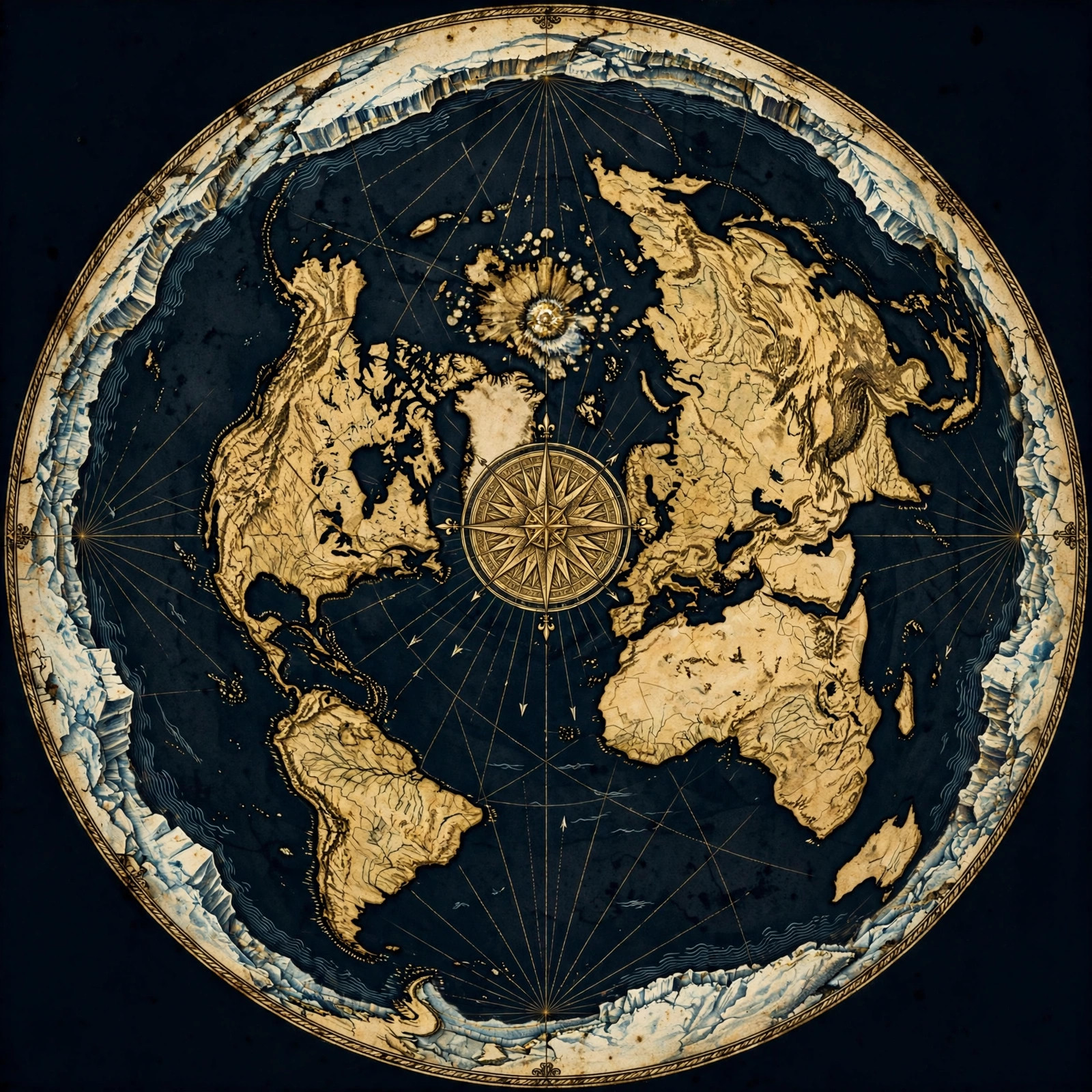
Don't take our word for it — verify it yourself. These historic flat earth maps let you trace the evidence in this article with a ruler and see the truth firsthand.
As an Amazon Associate we earn from qualifying purchases. See also our Amazon Finds page for more research gear.
Frequently Asked Questions
What if the person gets angry or defensive?
Stay calm and don't match their energy. Acknowledge their feelings, then gently change the subject or step away. You can always revisit the conversation later. Getting angry back only reinforces the stereotype that flat-earthers are aggressive, which closes doors.
Should I bring up flat earth at family gatherings?
Be selective. If the atmosphere is relaxed and curious, a brief question might be fine. But if it's tense or people are drinking, save it for another time. Relationships come first. You can always share a link or a video later in a private message.
How do I answer the “ships disappearing over the horizon” objection?
Ask if they've seen it personally or just heard about it. Then suggest using a zoom camera or binoculars to bring the ship back into view. If it reappears, the horizon is about perspective and distance, not curvature. Keep it simple and let them try it themselves.
What's the best single question to ask a globe believer?
“Have you ever personally verified the curvature of the Earth?” Most people haven't. It's a gentle question that invites reflection without confrontation. Follow up with, “What would you expect to see if the Earth were flat?” and let the conversation flow from there.
How long does it take for someone to change their mind?
It varies widely—sometimes months, sometimes years. The key is patience and consistency. Keep being the calm, curious person they know. Share resources like our <a href="/proofs/">evidence pages</a> when the moment is right, and let their own questions do the heavy lifting.
Start the Conversation Today
You don't need a degree in debate to talk to globe believers. You need patience, curiosity, and a genuine desire to share the truth about the Globe Deception. Start with a question, listen more than you speak, and keep the relationship at the center. Every respectful conversation is a seed planted—and some of those seeds will grow into full awakening.
Ready to deepen your own understanding? Explore our evidence collection, browse the flat-earth maps, and visit the store for materials that help you share the truth with confidence. Then go out and have that conversation. The world is waiting.
JOIN THE DISCUSSION