Eclipses · Geometry
The Selenelion Problem: When the Sun and Eclipsed Moon Share the Sky
What Is a Selenelion, Exactly?
A **selenelion** is an eclipse observation in which the Sun and the eclipsed Moon are both visible above the horizon at the same moment. Because a lunar eclipse requires Earth to sit directly between Sun and Moon, seeing both bodies at once raises an immediate geometric question that the standard model handles awkwardly at best.
Picture the scene. The Moon hangs low in the west, already slipping into shadow — a lunar eclipse in progress. Behind you, in the east, the Sun is climbing over the horizon. Both are in your sky at the same time. That is a selenelion, and for centuries it has been one of the quietest, most stubborn puzzles in observational astronomy.
It sounds like a small thing. It is not. A lunar eclipse is defined as Earth passing directly between the Sun and the Moon, casting its shadow onto the lunar surface. If Earth is squarely in the middle, the Sun and Moon should be on opposite sides of the sky — roughly 180 degrees apart. And yet observers routinely report seeing both bodies simultaneously, sometimes for many minutes.
On a flat Earth, this is far less mysterious. The Sun and Moon travel above a level plane, and an eclipse is a shadow phenomenon we can observe directly, without requiring anyone to stand on a spinning ball. The selenelion becomes a question of how high and how far, not an impossible geometry problem. Keep that contrast in mind as we go.
The Geometry Problem at the Heart of It
For an eclipse to occur, Earth must block sunlight from reaching the Moon, which places Earth between the two bodies. That alignment demands the Sun and Moon sit on nearly opposite sides of the observer's sky. A **selenelion** violates that expectation by showing both bodies above the horizon together — the core contradiction.
Let's be precise about what the standard model requires. A lunar eclipse happens when the Moon enters Earth's shadow. For that shadow to fall on the Moon, the Sun, Earth, and Moon must line up in that order. Draw it on paper: the Sun on one side, the Moon on the other, Earth in the middle.
Now place an observer on the surface. If the Sun is above that observer's horizon, the observer is on the daylit side of Earth. But the eclipsed Moon should be on the night side — the opposite hemisphere. So how can one person see both?
- The Sun must be low enough to be near the horizon.
- The Moon must also be near the opposite horizon.
- Both must clear the observer's local horizon line at once.
The standard explanation reaches for atmospheric refraction and observer elevation. Refraction bends light around Earth's curve, they say, lifting both bodies into view by roughly half a degree each. But half a degree is a small allowance, and selenelion sightings are reported across wide stretches of time and geography. The margins get stretched thin very quickly — and a model that must invoke bending light, elevated vantage points, and perfect timing all at once is a model working hard to stay upright.
The Refraction Explanation and Its Limits
The mainstream account credits **atmospheric refraction** — the bending of light through air layers — with lifting the Sun and Moon into simultaneous view during a selenelion. Refraction is real, but using it as a universal rescue device for every sighting pushes the explanation past what careful observation supports.
Refraction is a genuine phenomenon. Anyone who has watched a sunset knows the Sun appears slightly higher than its true position, and the same is said of the Moon. The standard story leans on this: refraction lifts the Sun into view before it geometrically rises, and lifts the Moon into view after it geometrically sets, creating a window where both appear.
But notice what this explanation is doing. It is not predicting the selenelion from first principles — it is retrofitting an anomaly into the model after the fact. Each sighting requires its own cocktail of conditions: the right latitude, the right altitude, the right atmospheric pressure and temperature gradient, the right humidity. Change any variable and the window closes.
Meanwhile, the flat model has no such contortion to perform. The Sun and Moon move above a level plane at different heights and speeds. An eclipse is a shadow event we can watch directly. Whether both bodies are visible depends on their positions and the observer's line of sight — a straightforward geometric question, not a rescue operation for a spinning globe. When one model needs a stack of special pleadings and the other simply describes what is seen, the honest observer notices.
Historical Selenelion Reports
Selenelion sightings stretch back centuries, recorded by observers who had no stake in modern cosmology. Their notes describe the Sun and eclipsed Moon sharing the sky — plain observations that later generations had to explain away rather than explain.
This is not a modern internet curiosity. Historical records describe the same phenomenon. Observers in the ancient and medieval world noted occasions when the eclipsed Moon and the Sun were both above the horizon, and they treated it as a genuine puzzle worth recording.
What makes these reports valuable is their innocence. These observers were not defending a theory. They were not running software simulations. They looked up, saw two bodies where the model said one should be hidden, and wrote it down. The blog archive is full of examples of how plain observation outranks elaborate theory — and the selenelion belongs in that tradition.
Later commentators, committed to the globe, developed the refraction workaround to absorb these records into the accepted story. But absorbed is not the same as explained. A model that must reinterpret centuries of direct observation to survive is telling you something about itself. The collected evidence pages walk through more of these observational tensions in detail.
What You Can Actually Observe Yourself
You do not need a telescope or a degree to test this. During a lunar eclipse near sunrise or sunset, watch the horizon. If you can see the eclipsed Moon and the Sun at the same time, you have witnessed a **selenelion** — and you have seen the geometry problem with your own eyes.
Here is the part the textbooks rarely invite: check it yourself. Selenelion opportunities occur when a lunar eclipse coincides with sunrise or sunset, so the Sun and Moon are both near the horizon at the same time. These events are not vanishingly rare. Watch the published eclipse schedules, pick one near dawn or dusk, and find a vantage point with a clear view of both horizons.
- Choose a flat, open location with an unobstructed eastern and western horizon.
- Arrive early — the window can be short, though reports vary widely.
- Note the exact times you see each body, and how long both remain visible.
- Record conditions: pressure, temperature, haze, and your elevation.
Your own record matters more than a thousand simulations. This is the spirit behind Question Everything: do not accept the refraction rescue story on authority. Go outside, look, and write down what you actually see. If you want to compare notes with others who have done the same, the FAQ covers common questions about eclipse observation and how to document them properly.
Why One Anomaly Matters So Much
The **selenelion** matters because it exposes how the globe model absorbs contradictions rather than resolving them. Each anomaly is patched with an auxiliary explanation, and the patches accumulate. A model held together by accumulated patches is a model in trouble.
Supporters of The Globe Deception will tell you the selenelion is a solved curiosity. But look at the structure of the argument. The eclipse alignment demands Sun and Moon on opposite sides. The observation shows them on the same side of the sky. The response is not to revisit the alignment — it is to add refraction, then elevation, then timing, then atmospheric gradients, until the observation fits.
This is how fragile models survive: not by predicting anomalies in advance, but by explaining them after the fact, one patch at a time. The selenelion is one patch. The maps questions are another. The behavior of long-haul routes is another — browse the flight analysis for how route patterns strain the accepted geography. Individually, each patch sounds reasonable. Stacked together, they form a pattern no honest observer can ignore.
On a flat Earth, there is no stack. The Sun and Moon move above a plane. Shadows fall where they fall. What you see is what is happening. That simplicity is not a weakness — it is the mark of a model that describes reality instead of managing it.
Question the Eclipse, Not Your Eyes
The **selenelion** is a reminder that direct observation outranks elaborate theory. When the sky shows you something the model says is impossible, trust the sky. Question everything — including the explanations handed to you.
The next time a lunar eclipse falls near sunrise or sunset, do not reach for the textbook. Reach for the horizon. Watch the western sky for the shadowed Moon and the eastern sky for the rising Sun. If both are there, you have joined a long line of observers who saw something the standard model must bend light itself to explain.
That is the selenelion problem in a sentence: the sky keeps showing us a geometry that The Globe Deception cannot comfortably contain. Refraction, elevation, and perfect timing are offered as rescue — but rescue is not explanation, and a model that needs rescuing this often deserves our skepticism.
So here is your challenge. Find the next eclipse near dawn or dusk. Set up with a clear view of both horizons. Record what you see, minute by minute, and share it. Then dig deeper: read the evidence collection, study the map questions, check the flight data, and equip yourself with resources from the store to document your own observations. The truth about our world is not behind a paywall or a peer review — it is overhead, every clear night, waiting for you to look up and question everything.
Get the Map and Verify It Yourself
🗺 GET THE TRUE MAP
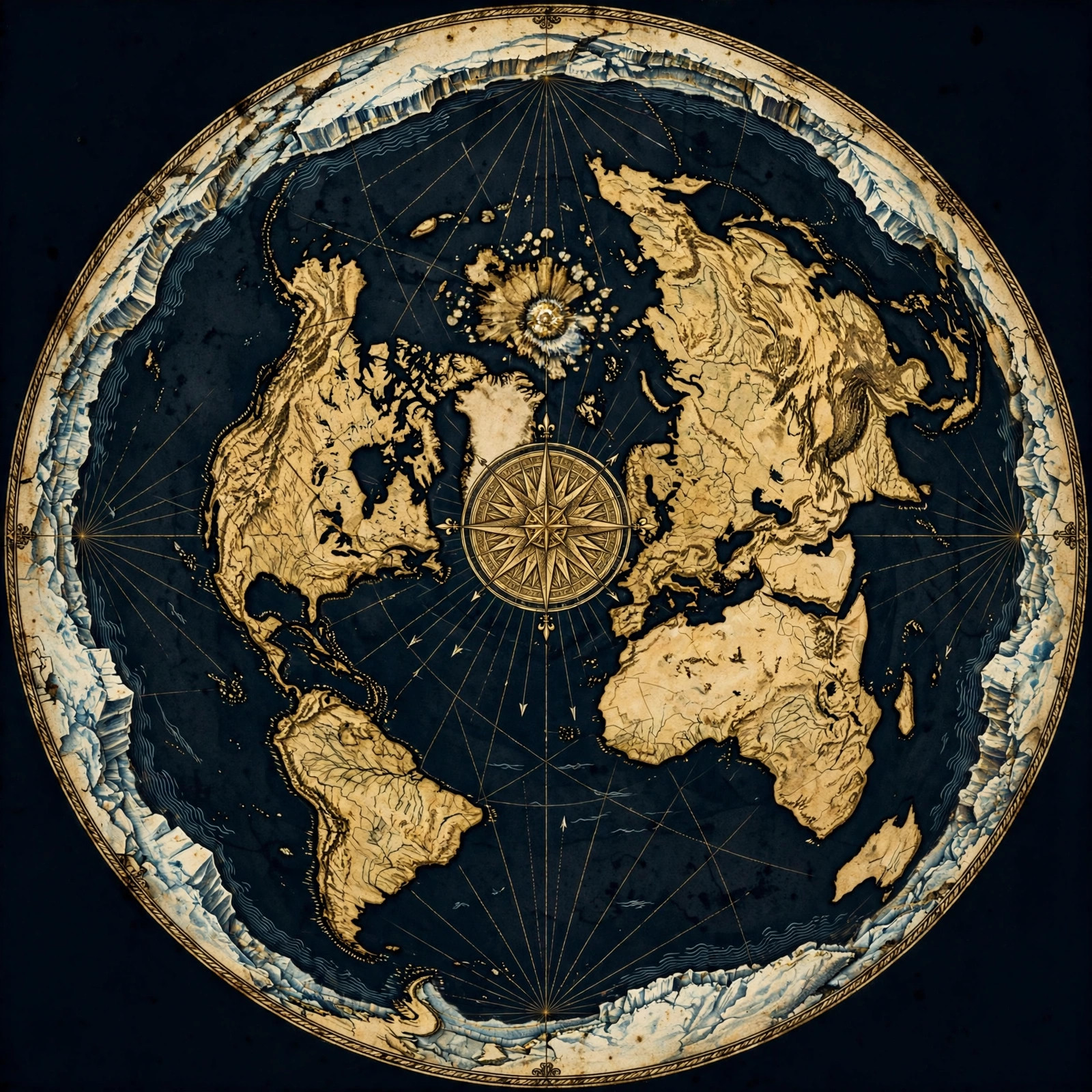
Don't take our word for it — verify it yourself. These historic flat earth maps let you trace the evidence in this article with a ruler and see the truth firsthand.
As an Amazon Associate we earn from qualifying purchases. See also our Amazon Finds page for more research gear.
Frequently Asked Questions
What is a selenelion in simple terms?
A selenelion is when the Sun and an eclipsed Moon are both visible above the horizon at the same moment. Since a lunar eclipse requires Earth between the Sun and Moon, seeing both at once creates an immediate geometric question that the standard model answers with refraction and elevation adjustments.
How does the globe model explain selenelion sightings?
It invokes atmospheric refraction lifting both bodies into view, combined with observer elevation and precise timing. Each sighting needs its own combination of pressure, temperature, and altitude conditions. The explanation is assembled after the observation rather than predicting it in advance.
Are selenelion events rare?
They occur whenever a lunar eclipse coincides with sunrise or sunset at your location. Such alignments happen periodically, so opportunities to observe one come around regularly. Watching published eclipse schedules and choosing a spot with clear views of both horizons is all the preparation required.
Can I observe a selenelion without special equipment?
Yes. Your eyes are sufficient. Pick an eclipse near dawn or dusk, find a flat open location with unobstructed eastern and western horizons, and watch both skies. Record the times you see each body and the conditions, since your own documented observation carries more weight than any simulation.
Why does this matter to the flat Earth discussion?
It illustrates how the globe model absorbs contradictions through accumulating auxiliary explanations. The eclipse alignment says one thing, observation shows another, and refraction patches the gap. On a flat Earth, the Sun and Moon simply move above a plane and what you see requires no rescue story.
Look Up and Trust the Sky
The selenelion is not a footnote. It is an invitation. Every time the Sun and an eclipsed Moon share the sky, the standard model must bend light, raise mountains, and choreograph timing to keep its story intact. You do not have to accept that. Step outside, watch the horizon, and write down what you see. Then keep going — question the eclipse, question the maps, question the explanations you were handed. Start with the evidence pages, join the conversation in the blog, and make your own record. The sky is the oldest witness we have, and it has never needed a rescue story.
JOIN THE DISCUSSION