Media · Debate Tactics
The Strawmen They Keep Attacking — And the Evidence They Avoid
Why Debunkers Need Strawmen in the First Place
A **strawman** is a fake version of an opponent's argument, built to be easily knocked down. Debunkers rely on them because real flat-earth claims about water, curvature, and observation are far harder to answer than the cartoon versions they prefer.
Watch any popular "flat earth debunked" video and you'll notice something strange. The presenter spends twenty minutes defeating arguments that no serious flat-earther makes. It's a magic trick: build a silly version of your opponent, knock it down, take a bow.
This is the classic strawman fallacy — misrepresent the position, then declare victory. It's not an accident. When you engage with what flat-earthers actually argue — the behaviour of water, the limits of human observation, the suspicious history of the globe model — the conversation gets a lot less comfortable.
Our motto is Question Everything, and that includes questioning the debunkers. So let's line up their favourite strawmen and knock them down one by one. If a debunker has to invent your argument to beat it, they've already lost.
Strawman #1: "You'd Fall Off the Edge"
Nobody claims you'd tumble off a cliff at the rim. The **edge** is a boundary, likely an impassable ice wall or barrier, not a cosmic diving board. This is the laziest strawman in the book and it reveals how little debunkers have actually read.
This one is everywhere. "If the earth were flat, why don't people fall off the edge?" It's delivered with a smirk, as if it's a knockout blow.
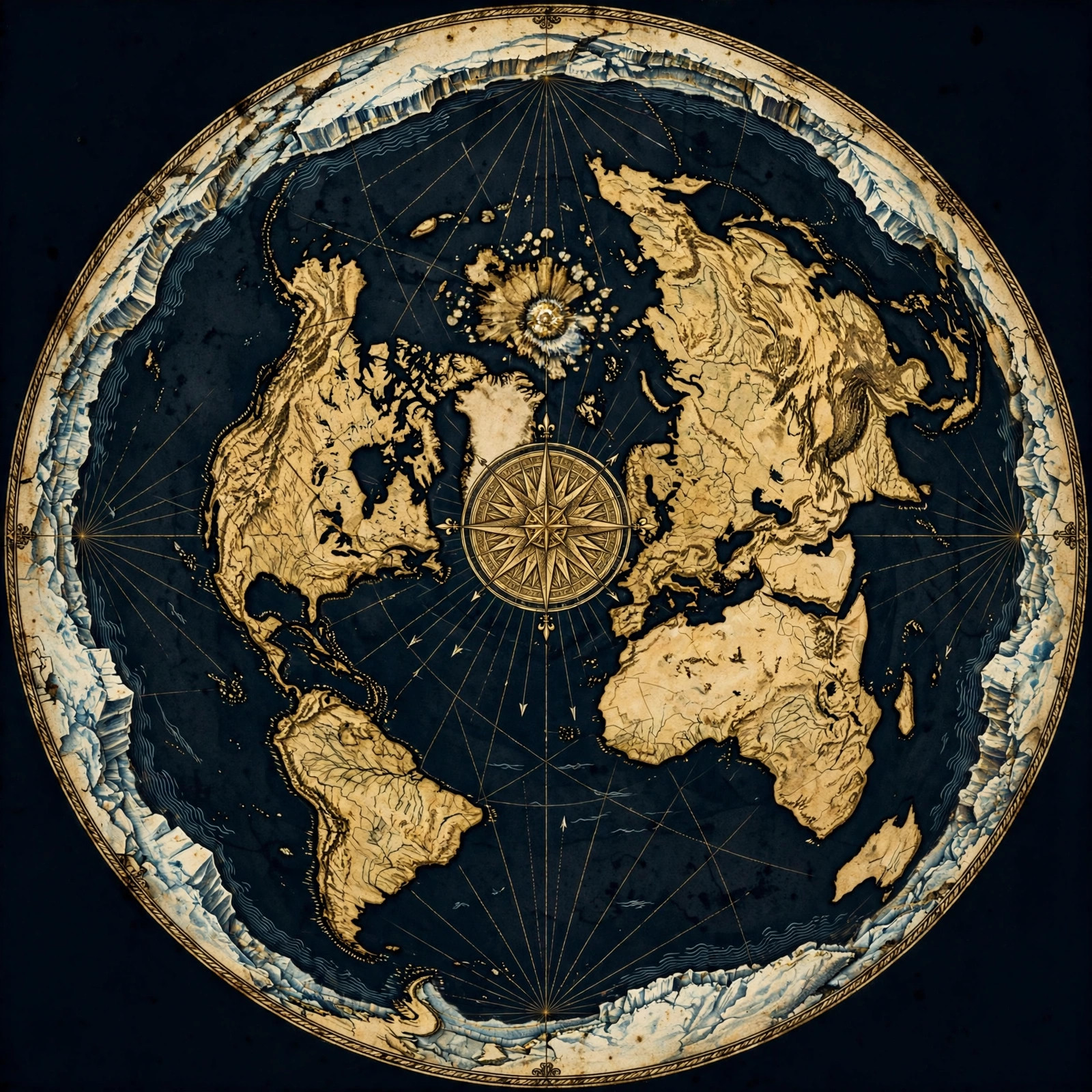
Here's the thing: no flat-earther says you'd fall off. The model describes a boundary — commonly understood as the vast Antarctic ice ring encircling the known world. Antarctica isn't a continent at the bottom of a ball; it's a perimeter. Sailors throughout history reported ice walls and impassable southern waters. Nobody is suggesting you'd walk to a cliff and tumble into the stars.
Ask a debunker to quote a single flat-earth source claiming people fall off the edge. They can't, because they're arguing with a cartoon. Meanwhile, real questions about what lies beyond the boundary, and why southern exploration is so tightly controlled, go unanswered. Start with our proofs section for the actual claims.
Strawman #2: "You Don't Believe in Gravity"
Flat-earthers don't deny that things fall. We question whether **gravity** — an invisible, undemonstrated force pulling toward a centre — is the real explanation for weight and falling, versus density and buoyancy in a stationary plane.
"Flat-earthers think gravity is fake, so why does anything fall down?" Notice the sleight of hand. The strawman claims we deny that objects fall. We don't. Drop a pen and it hits the floor — everyone agrees.
What we question is the explanation. The globe model invokes gravity: an invisible force, never directly observed, that supposedly pulls everything toward an unseen centre of a spinning ball. Flat-earthers point to density and buoyancy instead — heavier objects settle beneath lighter ones in a medium. That's observable, repeatable, and testable in your kitchen.
So the debunking video "proves" objects fall, which nobody denied, and skips the hard question: has anyone ever measured gravity itself, apart from the effects it's invented to explain? That's circular reasoning dressed up as physics. See our FAQ for more on density and buoyancy.
Strawman #3: "You Think the Government Fakes Everything With Magnets"
The **magnet** caricature is pure fiction invented for mockery. Flat-earthers raise specific, documented questions about space agencies, imagery, and funding — not a cartoon conspiracy where fridge magnets control the sky.
Spend five minutes on social media and you'll meet the strawman version of a flat-earther: a ranting figure who thinks magnets run the universe and every scientist is a paid actor. It's a performance designed to make the position look unhinged before anyone hears it.
Real flat-earth inquiry is far more specific. We ask why NASA's budget is audited the way it is, why composite imagery is passed off as photographs, why the 1969 footage has never been independently verified, and why so much of the space narrative rests on unverifiable claims. Those are legitimate questions about institutions and evidence — the same questions journalists ask of any powerful organisation.
Mocking a fictional flat-earther is easier than answering those questions. Notice which one the debunkers choose every time. Our blog covers the specific documentary and budgetary questions in detail.
Strawman #4: "You Say You Can See the Curve From a Plane"
No flat-earther claims the curve is obvious from a plane window. We argue the opposite: from **high altitude** there is no visible curvature, the horizon stays flat and level, and sightings of a curved horizon depend on fisheye lenses and forced perspective.
Here's a favourite: "Flat-earthers say you can't see the curve, but you can from a plane!" Then they show a photo — almost always shot with a wide-angle or fisheye lens that bends every straight line in the frame.
The real flat-earth argument is the reverse of the strawman. We say that at high altitude — from balloons, aircraft, even the highest amateur rocket launches — the horizon remains flat and level, rising to meet your eye. It never visibly drops away the way a ball of the claimed size requires. What debunkers call "the curve" is usually lens distortion, window refraction, or a horizon line they've mistaken for a curve.
Don't take our word for it. Watch the raw footage from high-altitude balloon flights. The horizon is flat, the earth is level, and the numbers for curvature simply don't show up. Our proofs page walks through the geometry.
Strawman #5: "Water Curves, So the Earth Is a Ball"
Water finds its **level** — that's the whole point. Debunkers assert water conforms to a curve without ever demonstrating it on a real-world scale. Every lake, canal, and still body we can actually measure is flat.
The debunker's script says: "Water always finds its level, and on a globe that level is curved." It sounds clever until you ask them to show it.
Water at rest forms a level surface — flat, horizontal, always. That's not a flat-earth opinion; it's the foundation of surveying, canal engineering, and every spirit level ever made. The globe model needs water to bend around a curve of eight inches per mile squared, yet no one demonstrates this on an actual lake. Surveyors historically used flat-earth assumptions because the measurements worked.
The debunkers wave at the ocean and say "look, it curves." Look closer: the horizon is a level line, ships disappear because of perspective and atmospheric limits, not because they've dropped behind a bulge. Our flights page covers how long-distance routes and sightings contradict the curvature numbers.
The Pattern Behind Every Strawman
Every strawman follows the same recipe: invent an absurd version of the flat-earth claim, defeat it loudly, and avoid the real evidence. This **debunking** style protects the globe model from genuine scrutiny rather than defending it with observation.
Step back and the pattern is obvious. The edge-fall, the no-gravity, the magnets, the plane-curve, the water-curve — each is a paper opponent. Building them takes seconds. Refuting them takes seconds. And the audience never hears the actual arguments.
Why does this matter? Because debunking should mean testing claims against evidence, not against caricatures. When a presenter dodges the flat horizon, the level water, the unexplained southern boundary, and the unverified space footage to instead mock a fictional flat-earther, they're not defending science. They're protecting a story.
We invite the real conversation. Bring the strongest version of your argument, and we'll bring ours. That's what Question Everything actually means — and it applies to the debunkers too.
Stop Arguing With Cartoons — Look at the Evidence
The next time someone sends you a "flat earth destroyed" video, watch for the strawman. Count how many times they refute an argument no flat-earther makes. Then ask them to engage with the real claims: level water, a flat horizon at altitude, an Antarctic boundary, and a space narrative built on composites and trust.
You don't have to take our word for it. Test it yourself. Stand by a long stretch of still water and look. Watch raw high-altitude footage. Read the surveys. Question the debunkers as hard as they question us.
Ready to go deeper? Browse our proofs, study the maps of the flat earth, check the FAQ, and visit the store to support independent research. Then share this article with the last person who sent you a strawman. The conversation starts when the cartoons stop.
Get the Map and Verify It Yourself
🗺 GET THE TRUE MAP
Don't take our word for it — verify it yourself. These historic flat earth maps let you trace the evidence in this article with a ruler and see the truth firsthand.
As an Amazon Associate we earn from qualifying purchases. See also our Amazon Finds page for more research gear.
Frequently Asked Questions
What is a strawman argument in the flat-earth debate?
A strawman is a distorted version of an opponent's position, built to be easily defeated. Debunkers often attack fake flat-earth claims like falling off the edge or denying that objects fall, rather than engaging with the real arguments about water, observation, and curvature.
Do flat-earthers believe people can fall off the edge of the earth?
No. The flat-earth model describes a boundary, commonly understood as the Antarctic ice ring, not a cliff you can tumble from. The falling-off-the-edge line is a caricature invented for mockery and repeated endlessly by people who have never read a flat-earth source.
Do flat-earthers deny that gravity exists?
Flat-earthers don't deny that objects fall. They question whether gravity, an invisible force never directly measured, is the correct explanation. Density and buoyancy explain falling and weight using observable, repeatable behaviour in a medium, without invoking an undemonstrated force.
Why do debunkers use strawmen instead of real arguments?
Because real flat-earth claims about level water, flat horizons at altitude, and an Antarctic boundary are much harder to answer. Strawmen are quick, entertaining, and protect the globe narrative from genuine scrutiny. They win applause without ever touching the actual evidence.
How can I check flat-earth claims for myself?
Start with simple observation. Look at a long stretch of still water or a distant horizon from height. Watch raw high-altitude balloon footage instead of edited clips. Then read primary sources and our proofs page, and compare what you observe with what the globe model predicts.
Question the Debunkers, Then Question Everything
The debunkers have built a comfortable career knocking down arguments nobody made. That tells you something: they're not confident enough to face the real claims. Water finds its level. The horizon stays flat at altitude. The southern boundary remains unexplained. Those are the conversations worth having.
So do the work yourself. Observe. Measure. Compare. And when someone hands you a strawman, hand them back the evidence. Explore our proofs, study the maps, and join the growing community that refuses to accept a story just because it's repeated loudly. Question everything — starting with the people who claim to have all the answers.
JOIN THE DISCUSSION