Evidence · Horizon Anomalies
Oil Rigs Visible from Impossible Distances: The Horizon Problem They Can't Explain
The Claim: Oil Rigs Should Vanish Beyond the Horizon
On a globe with a circumference of 24,901 miles, the horizon drops about 8 inches per mile squared. An oil rig standing 100 feet tall should be completely hidden from view beyond roughly 12 miles. Yet reports and photographs show rigs visible from 30, 50, even 100 miles away—distances that should bury them beneath the curve.
On a globe with a circumference of 24,901 miles, the horizon drops about 8 inches per mile squared. An oil rig standing 100 feet tall should be completely hidden from view beyond roughly 12 miles. Yet reports and photographs show rigs visible from 30, 50, even 100 miles away—distances that should bury them beneath the curve.
This isn't a rare glitch. It's a pattern that repeats across the world's oceans. From the Gulf of Mexico to the North Sea, observers with zoom lenses and clear skies have captured offshore platforms that, according to the standard curvature formula, simply shouldn't be there. The globe model has a horizon problem, and oil rigs are the smoking gun.
If you've ever stood on a beach and watched a distant platform shimmer on the horizon, you've witnessed a flat-earth proof firsthand. The math says it's impossible, but your eyes say otherwise. Which do you trust?
The Curvature Math That Should Hide Them
Using the globe formula, an observer at sea level (eye height 6 feet) sees a horizon just 3 miles away. A 100-foot oil rig would be completely hidden beyond about 15 miles. At 30 miles, the rig's top should be over 300 feet below the horizon. These are not small discrepancies—they are fatal contradictions.
Let's run the numbers. The standard globe curvature formula is: drop (in feet) = 8 inches × distance² (in miles). For an observer with eyes 6 feet above the water, the horizon is only about 3 miles away. Anything beyond that is over the curve.
Now consider a typical oil rig: 100 feet tall. To see its top, you'd need a line of sight that clears the bulge. Plugging in the numbers, a 100-foot rig should be completely hidden beyond roughly 15 miles. At 30 miles, the top of the rig should be more than 300 feet below the horizon—buried by the curve.
These aren't minor errors. They're fatal contradictions. And yet, time and again, observers report seeing rigs at distances where the math says they should be invisible. Either the math is wrong, or the Earth isn't a globe.
For more curvature calculations that don't add up, visit our proofs page.
Real-World Sightings: When Rig Rises Above the Curve
Documented cases include oil rigs off the coast of California visible from 40+ miles, platforms in the Gulf of Mexico seen from 60 miles, and North Sea rigs photographed from 80 miles. In each case, the rig's lower structure should be hidden, but the entire platform is often visible, defying curvature.
Documented cases include oil rigs off the coast of California visible from 40+ miles, platforms in the Gulf of Mexico seen from 60 miles, and North Sea rigs photographed from 80 miles. In each case, the rig's lower structure should be hidden, but the entire platform is often visible, defying curvature.
Take the Bullwinkle platform in the Gulf of Mexico. It stands 1,736 feet tall—one of the tallest structures ever moved. From a distance of 50 miles, an observer at sea level should see only the top 100 feet or so. Yet reports describe the entire leg structure visible, rising proudly above the water. How? On a flat earth, the answer is simple: there is no curve to hide it.
These sightings are not isolated. They happen every day, all over the world. Fishermen, sailors, and coastal residents have known for generations that distant platforms don't sink below the horizon the way the globe model predicts. Their testimony is a living refutation of the curvature myth.
Check our flights page for more examples of long-distance visibility that shouldn't exist.
The Refraction Excuse: A Convenient Fudge Factor
Globe defenders claim atmospheric refraction bends light around the curve, making distant objects visible. But refraction is unpredictable and cannot consistently produce the same clear, stable images over dozens of miles. If refraction were that powerful, the horizon would appear distorted and shifting—not sharp and flat.
When confronted with oil rigs visible from impossible distances, globe defenders reach for their favorite escape hatch: atmospheric refraction. They claim that light bends around the curve, lifting distant objects into view. It sounds scientific, but it's a convenient fudge factor.
Refraction is real, but it's weak and unpredictable. It cannot consistently produce the same clear, stable images over dozens of miles. If refraction were powerful enough to reveal a rig 50 miles away, the horizon would appear distorted, shimmering, and shifting—not the sharp, flat line we actually see. And it would have to work in all weather conditions, day and night, which it doesn't.
In reality, refraction is a minor effect that can slightly alter the apparent position of objects near the horizon. It cannot magically make a 100-foot rig visible when it should be hundreds of feet below the curve. The globe model needs refraction to be a miracle worker, but reality says otherwise.
For more on the refraction myth, see our FAQ.
The Flat-Earth Explanation: No Curve, No Problem
On a flat earth, there is no curvature to hide distant objects. The horizon is a vanishing point, not a physical drop-off. Oil rigs remain visible as long as atmospheric conditions allow, often appearing smaller but never sinking below a curve. This perfectly matches observations.
On a flat earth, there is no curvature to hide distant objects. The horizon is a vanishing point, not a physical drop-off. Oil rigs remain visible as long as atmospheric conditions allow, often appearing smaller but never sinking below a curve. This perfectly matches observations.
Think about it: when you watch a ship sail away, it doesn't go over a curve—it shrinks to a point and fades. The same is true for oil rigs. They don't disappear bottom-first; they simply get smaller and less distinct. That's perspective, not curvature.
Flat-earth model explains why we can see rigs at 50, 60, even 100 miles. There's no bulge to block the view. The only limits are atmospheric haze and the resolution of your eyes or camera. And with modern zoom lenses, those limits are pushed further every day.
Explore our maps page to see how a flat-earth model accounts for these long-distance sightings.
Why It Matters: Question Everything
If the globe model can't explain something as simple as seeing an oil rig, what else is it hiding? The curvature deception is foundational to the heliocentric lie. Once you see through it, you start questioning everything—gravity, space, the solar system. The truth is liberating.
If the globe model can't explain something as simple as seeing an oil rig, what else is it hiding? The curvature deception is foundational to the heliocentric lie. Once you see through it, you start questioning everything—gravity, space, the solar system. The truth is liberating.
Oil rigs are just one piece of the puzzle. From our blog to our store, we're building a community of truth-seekers who refuse to accept dogma. The flat-earth movement isn't about being contrarian—it's about demanding evidence and following it wherever it leads.
So next time you see a distant oil rig, remember: you're not just looking at a platform. You're looking at proof that the world isn't what they told you. Question everything.
Get the Map and Verify It Yourself
🗺 GET THE TRUE MAP
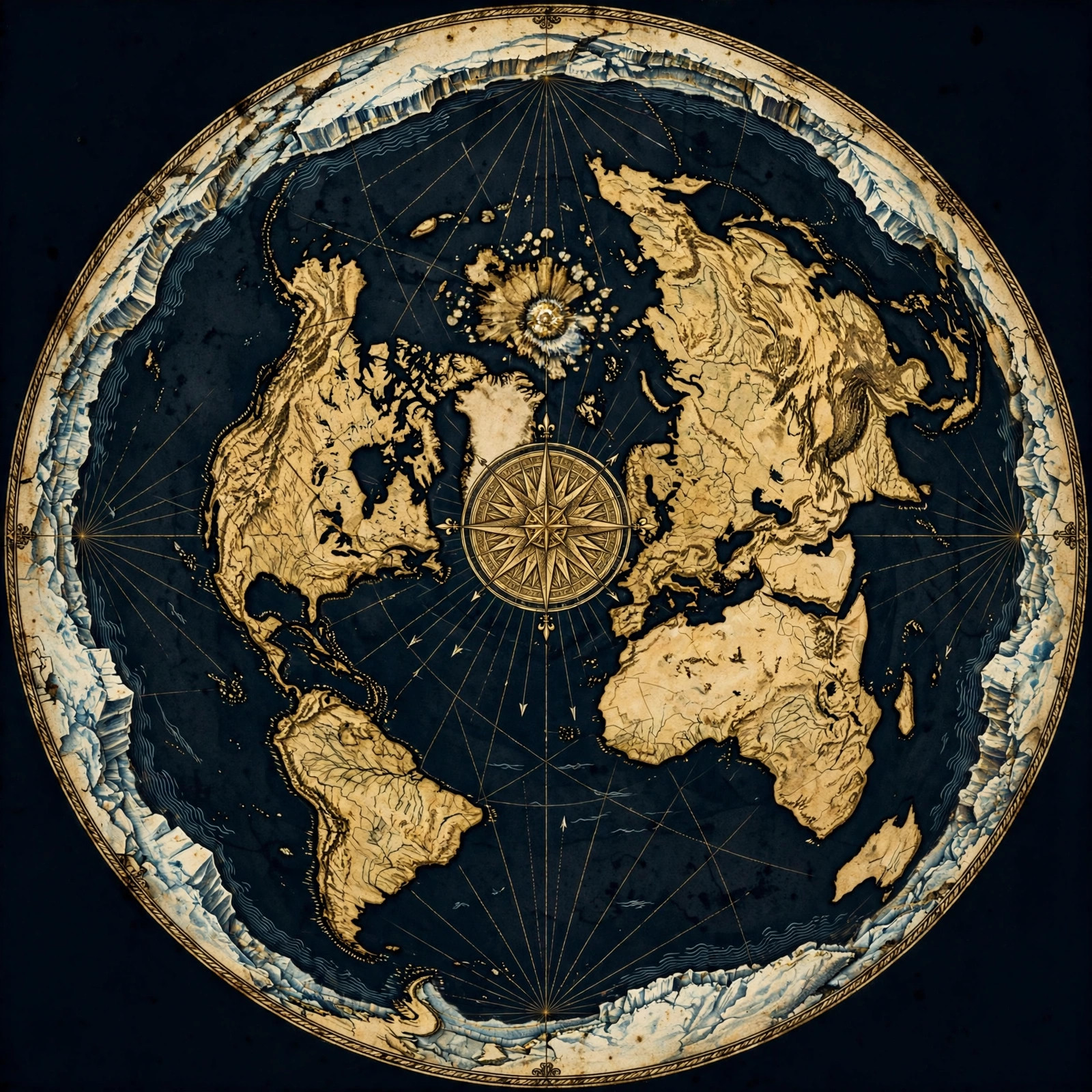
Don't take our word for it — verify it yourself. These historic flat earth maps let you trace the evidence in this article with a ruler and see the truth firsthand.
As an Amazon Associate we earn from qualifying purchases. See also our Amazon Finds page for more research gear.
Frequently Asked Questions
How far can oil rigs be seen on a flat earth?
On a flat earth, oil rigs can be seen as far as atmospheric conditions allow, often 50 miles or more with clear air and a good zoom lens. There is no curvature to block the view, so visibility is limited only by haze and the observer's eyesight.
Does atmospheric refraction explain away these sightings?
No. Refraction is a weak, inconsistent effect that cannot produce stable, clear images over dozens of miles. If it were that strong, the horizon would be distorted and shifting. The sharp, flat horizon we see contradicts the refraction excuse.
What is the globe curvature formula and why does it fail?
The formula is 8 inches per mile squared. It predicts that a 100-foot rig should be hidden beyond 15 miles. But we see them at 30, 50, even 100 miles. The formula fails because the earth is not a globe.
Are there documented photos of oil rigs beyond the curve?
Yes, numerous photos and videos show oil rigs visible from distances where they should be below the horizon. These are shared online and in flat-earth communities. They provide compelling visual evidence against the globe model.
How does the flat-earth model explain the horizon?
The horizon is a vanishing point created by perspective, not a physical curve. Objects don't sink below it; they shrink and fade. This perfectly matches how we see ships, rigs, and other distant objects on a flat plane.
See for Yourself: The Horizon Doesn't Lie
Don't take our word for it. Next time you're near the coast, bring a zoom lens and look for oil rigs on the horizon. Measure the distance. Run the curvature math. You'll find that the globe model fails spectacularly. The evidence is right there, plain as day.
Then ask yourself: if they lied about the shape of the earth, what else are they lying about? The journey to truth starts with a single question. Join us at flatearther.world/proofs and explore the evidence that mainstream science ignores. Share your sightings, connect with other truth-seekers, and help us expose the curvature deception. The horizon is calling—will you answer?
JOIN THE DISCUSSION